Cappadocia’s soft rock hides hundreds of chapels carved by early Christians, their walls still bright with Byzantine frescoes. Here is what to see and know.
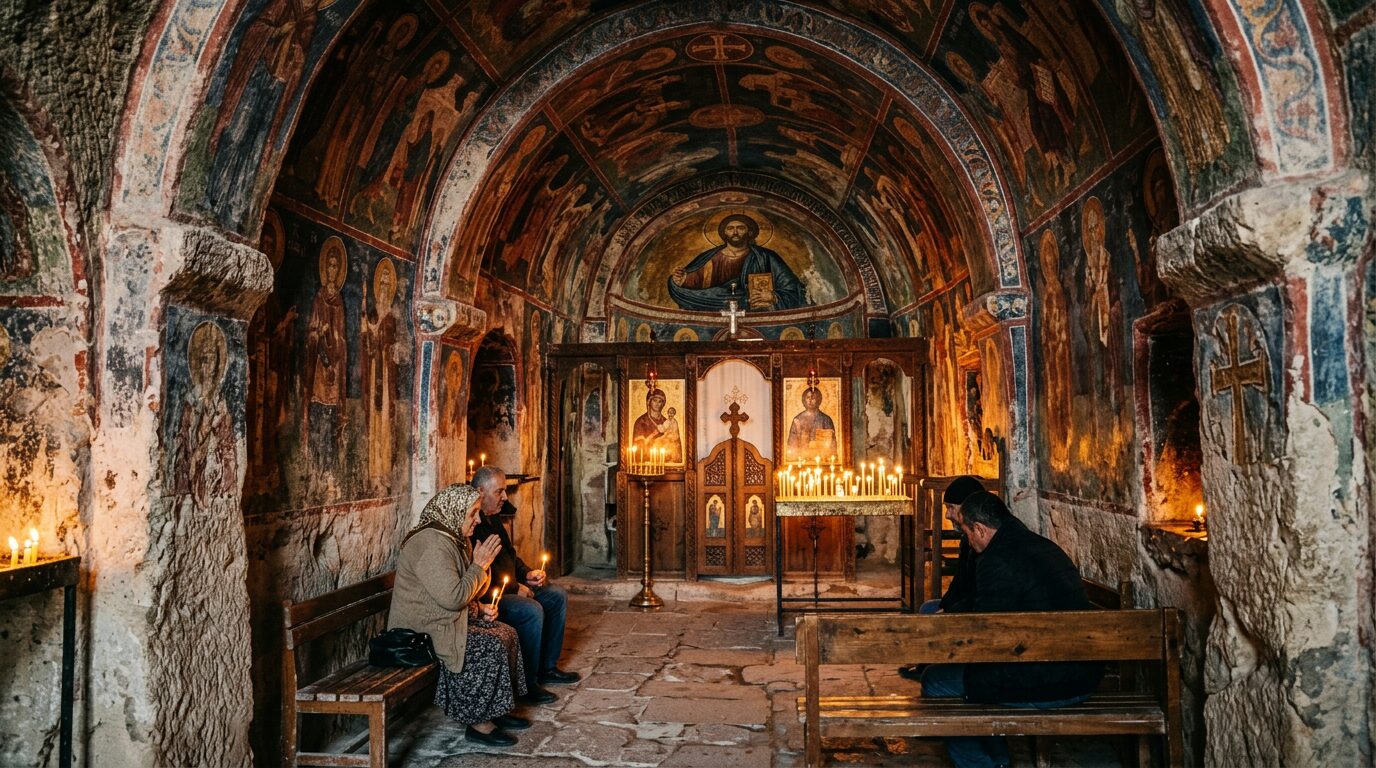
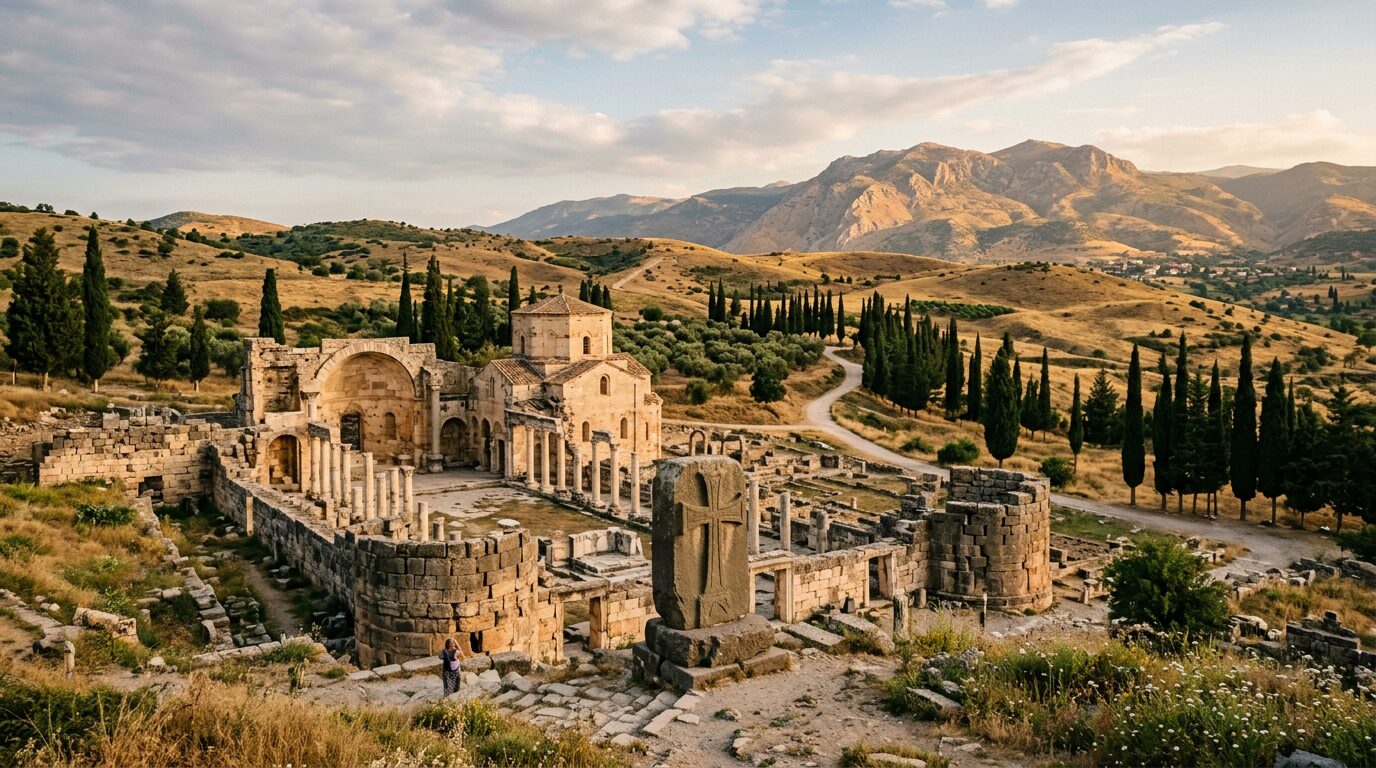
Long before the hot-air balloons, Cappadocia was a cradle of monastic Christianity. From the 4th century, monks and communities carved churches, chapels and entire monasteries into the soft volcanic rock, decorating them with vivid frescoes that survive to this day.
Göreme Open-Air Museum
The UNESCO-listed Göreme Open-Air Museum is the highlight — a cluster of rock-cut churches such as the Dark Church (Karanlık Kilise), whose frescoes are astonishingly well preserved thanks to limited light. It is the single best place to grasp Cappadocia’s Christian heritage.
Underground Cities
At Derinkuyu and Kaymaklı, vast multi-level underground cities sheltered thousands of early Christians from raids, complete with chapels, wells, kitchens and ventilation shafts carved deep into the earth.
Visiting & Combining
Allow half a day for Göreme and an underground city. Cappadocia pairs beautifully with a Christian pilgrimage or a classic tour — see the balloon guide and faith tourism programmes, or build your own tour.
Frequently Asked Questions
What are the cave churches of Cappadocia?
They are chapels and churches carved into Cappadocia’s soft volcanic rock by early Christians from the 4th century onward, many decorated with well-preserved Byzantine frescoes — best seen at the Göreme Open-Air Museum.
Why did Christians build underground cities in Cappadocia?
Underground cities like Derinkuyu and Kaymaklı allowed early Christian communities to shelter from raids, with chapels, living quarters, wells and ventilation carved deep underground.
How long do you need in Cappadocia?
Two to three days lets you enjoy the cave churches, an underground city, the valleys and a sunrise hot-air balloon flight.
Plan Your Türkiye Trip With Local Experts
Licensed TÜRSAB agency — tours, transfers, visas and tailor-made itineraries across Türkiye.